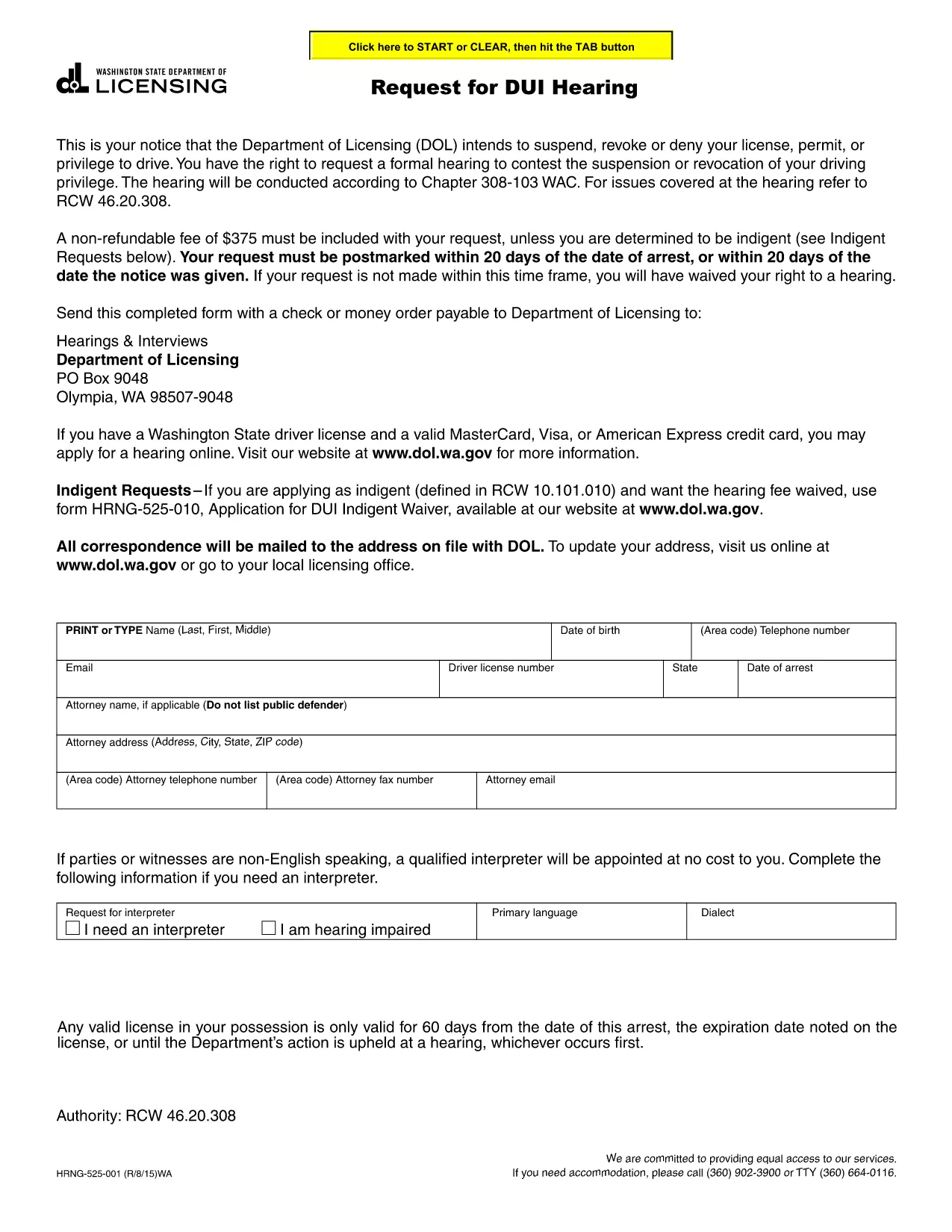
If you have received a notice that your driver’s license is being suspended, revoked, or denied because of a DUI (Driving Under the Influence) offense, you have the right to request a formal hearing. Our fillable PDF form makes it simple to prepare a proper request, avoid costly mistakes, and keep your hearing on schedule.
What Is a DUI Hearing Request?
A DUI hearing request is a written application to the state Department of Licensing (or equivalent agency) asking for a hearing to contest the proposed action on your driving privileges. The request must include specific information about the offense, personal details, and any supporting evidence you wish the hearing officer to consider.
How to Complete the Fillable PDF Form
With Formize’s online PDF filler, you can fill out the form directly in your browser—no extra software needed. Follow these steps:
- Click the "Fill out this form" button on the page.
- Wait for the Formize PDF Filler app to load.
- Enter your personal information, case number, and the reason you are requesting a hearing.
- Attach any supporting documents (e.g., medical records, proof of program completion).
- Review the completed form for accuracy, then click "Submit" to download the completed PDF.
- Print, sign, and mail (or upload) the form to the address indicated on the notice.
Common Mistakes to Avoid
- Leaving fields blank: Incomplete forms are rejected, delaying your hearing.
- Incorrect case numbers: Double‑check the number on your notice.
- Missing signatures: Your signature validates the request; unsigned forms are invalid.
- Failing to attach evidence: Include all relevant documents to strengthen your case.
Where to Submit Your Completed Form
After you have filled, signed, and printed the PDF, send it to the address listed on your suspension notice. Most states also accept electronic submissions through their licensing portal—check the agency’s website for details.
Need Help? Find Resources
While the form is straightforward, you may benefit from legal advice. Consider contacting a local DUI attorney, a legal aid organization, or your state’s driver licensing helpline for guidance.